Questions to Ask a Parent or Grandparent on Camera
The best questions to ask a parent or grandparent on camera are open, personal, and story focused. Ask about childhood, family, work, love, friendship, home, difficult seasons, funny memories, values, and advice for future generations. A guided recorded interview helps turn these answers into a meaningful legacy film or family history video.
Why the right questions matter
Most people do not tell their life story in order. They remember in fragments.
A photo. A smell. A song. A kitchen. A garden. A person’s name. A couch where stories were told. A small detail that suddenly opens the door to a whole chapter.
That is why the questions matter.
When you ask a parent or grandparent broad questions like, “Tell me about your life,” it can feel too big. They may not know where to begin. But when you ask, “What was your childhood kitchen like?” or “Who in your family made everyone laugh?” the answer often becomes more vivid.
Good questions do not interrogate. They invite.
They give someone a place to start.
How to make the conversation feel natural
Before you begin, choose a quiet and comfortable setting. A living room, kitchen table, garden, or familiar chair can help someone feel at ease.
Do not rush. The best stories often need space. Let silence happen. Give your parent or grandparent time to think.
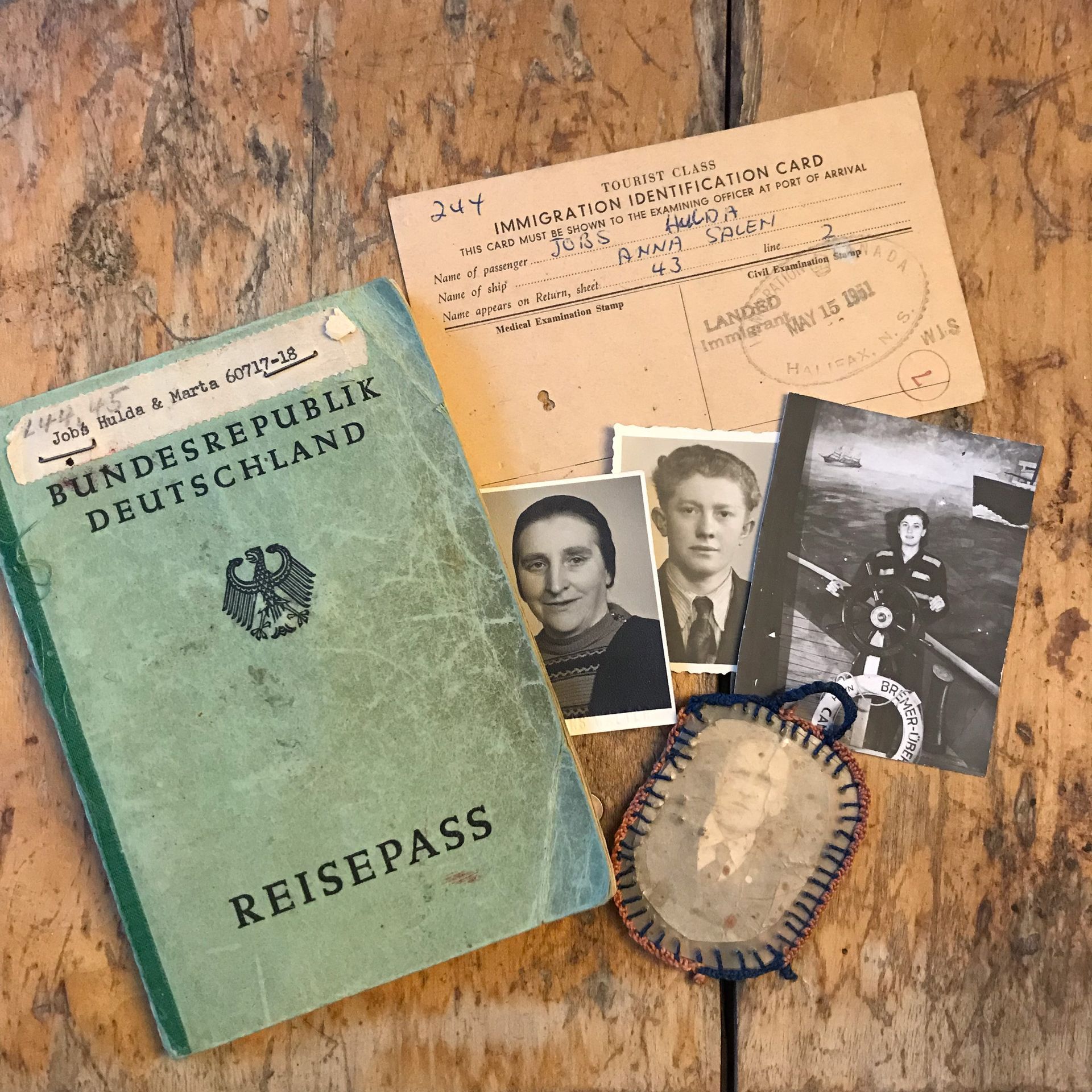
It can also help to have a few photos nearby. An old album can bring back names, places, and details that might not appear in a formal question list.
Remember, the goal is not perfection. The goal is presence.
You are preserving a loved one’s voice, humour, memories, values, and way of telling a story.
Childhood questions
Childhood is often one of the best places to begin because it opens the world someone came from.
Ask:
- Where were you born, and what was your first home like?
- What do you remember most about your childhood kitchen?
- Who lived nearby when you were growing up?
- What games did you play?
- What chores did you have?
- What did your parents or grandparents teach you?
- What did a typical school day look like?
- Who was your best friend?
- What did your family do for fun?
- What is a childhood memory that still makes you smile?
Follow-up prompts:
- What did that place look like?
- Who else was there?
- What do you remember hearing, smelling, or seeing?
- How did you feel about it at the time?
Family history questions
These questions help preserve names, relationships, traditions, and family patterns.
Ask:
- What do you know about where our family came from?
- What stories were passed down to you?
- Who was the storyteller in your family?
- What family traditions do you remember most?
- Were there recipes, songs, sayings, or customs that mattered?
- What do you remember about your parents?
- What were your grandparents like?
- Who in the family had the strongest personality?
- Who made everyone laugh?
- What family stories should not be forgotten?
Sometimes the most useful family history is not formal genealogy. It is the everyday detail. Who had tea at what time. Who kept the house running. Who told jokes. Who was stubborn. Who quietly helped everyone.
Love, marriage, and friendship questions
Stories about love and friendship often reveal a person’s character.
Ask:
- How did you meet your spouse or partner?
- What do you remember about your first date?
- When did you know the relationship mattered?
- What made your closest friendships last?
- Who was there for you during difficult times?
- What did friendship look like when you were younger?
- What is a story about an old friend that still makes you laugh?
- What did you and your friends do that your parents probably did not need to know about?
This is where gentle humour can bring a film to life. Old friends walking through a park and laughing together may carry decades of shared memory in one expression.
Those moments matter.
Work, purpose, and community questions
Work is rarely just work. It often holds stories about responsibility, pride, sacrifice, identity, and community.
Ask:
- What was your first job?
- What job taught you the most?
- What was a typical workday like?
- Who did you work with that you still remember?
- What work are you proudest of?
- What was hard about providing for a family?
- How did your community change during your life?
- What did neighbours do for each other?
- What role did community play in your life?
For Saskatchewan families, these questions may open stories about farms, small towns, businesses, schools, churches, community halls, hospitals, offices, shops, roads, weather, harvests, or city neighborhoods.
Place is often part of the story.
Parenting and family life questions
These questions can be especially meaningful for adult children.
Ask:
- What do you remember about becoming a parent?
- What was I like as a child?
- What story about me have you told the most?
- What did parenthood teach you?
- What was harder than you expected?
- What are you proud of as a parent?
- What family moments do you wish you could relive?
- What did you hope your children would understand one day?
- What values did you try to pass on?
Be ready for laughter here. Parents often remember the stories their children hoped were forgotten.
The haircut. The school concert. The outfit. The moment everyone noticed.
These stories are not small. They are part of the family’s living memory.
Questions about difficult seasons
Not every question needs to be light, but sensitive topics should be approached with care.
Ask gently:
- What was one difficult season that shaped you?
- Who helped you through hard times?
- What did you learn from loss or disappointment?
- What gave you strength?
- Is there a challenge you are proud of surviving?
- What would you tell someone going through something similar?
Do not push if someone does not want to answer. A legacy film should feel respectful, not extractive.
Some stories need time. Some do not need to be included. The person being interviewed should feel dignity and control.
Reflection and legacy questions
These questions help bring meaning to the film.
Ask:
- What are you grateful for?
- What are you proudest of?
- What do you hope your family remembers?
- What advice would you give your grandchildren?
- What matters more than people realize?
- What have you learned about love?
- What have you learned about family?
- What does a good life mean to you?
- What would you like to say to future generations?
These questions often create the emotional centre of a legacy film.
They do not need to be grand. Sometimes the simplest answer is the most powerful.
Should you record the interview yourself or hire help?
You can absolutely begin yourself. A phone, a quiet room, and good questions are enough to start preserving family memories.
But a guided recorded interview has advantages. A skilled interviewer can help someone feel comfortable, ask natural follow-up questions, manage pacing, and create room for both humour and reflection.
At In My Day Films, the interview becomes the foundation of a cinematic legacy film. Family photos, music, and careful editing are then used to shape the stories into something your family can watch, share, and pass down.
FAQ
What questions should I ask a parent on camera?
Ask about childhood, family, work, love, parenting, friendship, difficult seasons, funny memories, values, and advice for future generations.
What questions should I ask a grandparent?
Ask about their childhood home, parents, grandparents, school, first job, marriage, family traditions, community life, and what they hope future generations remember.
How long should a life story interview be?
It depends on the person and project. A meaningful interview can begin with one hour, but a deeper life story film may involve a longer guided conversation.
How do I make the interview feel less awkward?
Choose a comfortable setting, keep the tone conversational, use photos as prompts, ask one question at a time, and allow silence.
Can funny stories be part of a legacy film?
Yes. Funny stories often reveal personality, family dynamics, and the warmth of everyday life. Humour is an important part of memory.
Recent Posts